Branco Weiss Fellow Since
2026
Research Category
Immunology, developmental biology, endocrinology, sex differences in health and disease, systems biology
Research Location
Pasteur Institute, Paris, France
Background
Women and men differ markedly in their susceptibility to diseases, especially in contexts where the immune system is at the core of pathology. These differences are among the most consistent observations in medicine, yet their biological origins remain elusive. Current models largely explain immune sexual dimorphism as a consequence of sex hormones acting in peripheral tissues. But what if biological sex is not merely a variable, but one of the developmental principles through which the immune system is built? Understanding when and how immune sexual identity is established originally could fundamentally reshape our view of immunity, revealing sex as a core organizing principle of immune development rather than a peripheral modifier of immune function.
Details of Research
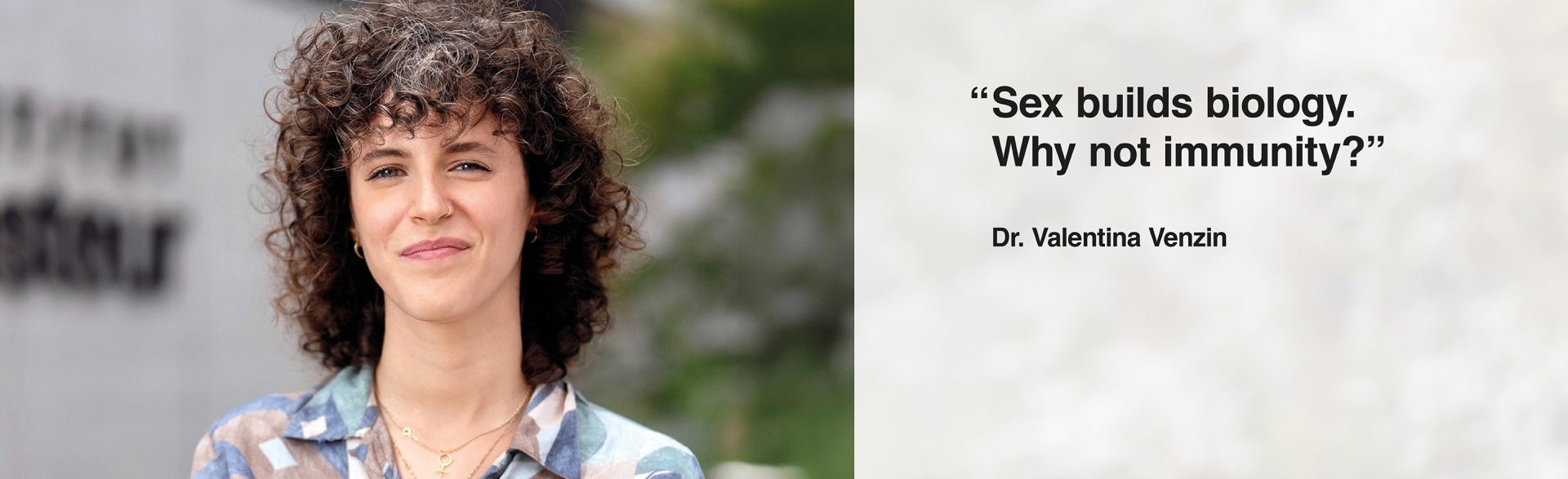
In Decoding Immune Sexual Dimorphism from its Origin to Tissues, Valentina Venzin aims to determine when, where, and how immune sex differences are set originally. She proposes that sex hormonal signals acting during critical developmental windows (such as puberty) imprint sex-biased programs in developing T cells within the thymus. To test this hypothesis, she will combine genetic mouse models, hormonal interventions, transplantation experiments, single-cell sequencing, and spatial transcriptomics. The project will investigate how sex hormones influence thymic development, how immune identities are maintained or altered during hormonal transitions, and whether immune sex differences can be reprogrammed throughout life. By integrating experimental and computational approaches across species, the research seeks to establish general principles governing immune sexual dimorphism and provide a foundation for more precise, sex-aware approaches to medicine.